
ABSTRACT
Ranch dressing is readily recognized and inconsistently explained. Preparation accounts diverge over dairy, oils, herbs, acidity, and the point at which a packet becomes an achievement. We examine this provenance problem through native-emulsion hydrology, prehistoric lacustrine reconstruction, dry-resource recovery, and a five-year reservoir balance. The framework distinguishes extraction from conditioning and restoration from creation. Findings indicate that recoverable volume, herb distribution, and pressure history are more useful measures of resource health than the confidence with which someone says “my grandmother made it this way.”
1. One hundred people, one hundred explanations
Ask one hundred people how to make ranch dressing and you will receive one hundred answers. Mayonnaise is essential until it is unnecessary. Buttermilk is foundational until sour cream arrives. Yogurt is introduced by someone who wishes to improve the meeting. Garlic changes quantity, form, and occasionally jurisdiction.
Then somebody mentions a packet.
The Directorate designates this the Recipe Divergence Problem: agreement about the identity of the finished substance coexists with substantial disagreement about how it comes into existence. The number one hundred is a convenient field threshold. Argument generally begins before respondent four.
This is an elicitation problem, not a claim that one hundred standardized interviews established one hundred chemically unique recipes. The observation is more ordinary and more troublesome: people confidently recognize ranch while describing mutually incompatible preparation histories.
The packet respondent offers the cleanest account. Add the specified liquid, stir, and wait. These instructions explain an operation. They do not explain the powder.
We therefore begin upstream of the kitchen, where confidence is less abundant and the storage formations are considerably larger.
2. The reservoir beneath the recipe
A productive native-emulsion system requires connected storage space, a confining formation, and sufficient pressure to keep its dispersed phases in a cooperative state. Herbaceous inclusions remain suspended within the recoverable medium; groundwater enters along fractures and changes the concentration before anyone chooses a mixing bowl.
Near the surface, exposed basins accumulate milder material and permit wind-driven herb drift. At depth, caprock retains a denser, more stable emulsion. Dry residual horizons preserve the recoverable solids after the mobile water fraction has departed.

Ranch dressing is recovered from these natural formations. Open deposits can be collected at the surface; confined deposits are accessed by drilling and pumping. The familiar expression “ranch mining” includes fluid recovery as well as extraction of dehydrated beds. The bottle begins downstream of the resource.
The dressing occupies pore spaces and connected fractures; it is not the limestone itself. A rock labeled “ranch-bearing” should therefore be assayed rather than offered to a salad. Host material has poor coverage and an unacceptable crunch coefficient.
3. The Great Native Ranch Lakes
The leading depositional model reconstructs extensive prehistoric basins of native ranch, collectively termed the Great Native Ranch Lakes. These occupied broad lowlands supplied by herb-bearing recharge and slow accumulation of organic constituents. Wind distributed surface inclusions; settlement, microbial alteration, and changing water levels established the precursor emulsion.

Subsequent sedimentation buried portions of the lake system beneath confining strata. Burial retained the dispersed phases while separating adjacent storage compartments. Former shoreline deposits became dry residual beds. Deeper pockets preserved fluid ranch under pressure, apparently without requiring a refrigerator large enough to contain a geological basin.
A valley can be hidden by sediment. Its emulsion does not consequently become a secret recipe. The Directorate distinguishes concealment by overburden from concealment by an unusually confident label.
4. Megafaunal access and prehistoric drawdown
Reconstruction of shoreline access indicates that large herbivores could have withdrawn substantial quantities directly from exposed formations. Long-necked animals enjoyed a reach advantage but required correspondingly greater volumes. Small animals had lower individual demand and a greater tendency to congregate around the convenient edge.

The presence of plants nearby does not establish that those plants were dipped. Drinking, dipping, and standing in ranch are separate behaviors with separate effects on useful inventory. The latter introduces a foot-shaped uncertainty into any estimate of recoverable volume.
Jaw-retained dressing represents a withdrawn volume even when the animal has not yet swallowed it. Early accounting systems that measured only ingestion therefore understated depletion and overstated the amount of ranch still available to everyone else.
The Directorate does not attribute dinosaur extinction to condiment scarcity. It does observe that a large dinosaur entering a small lake could turn a stable reserve into a catering emergency without any change in the underlying recipe.
5. Sampling without accidentally catering
Modern samples are recovered using a pressure-retaining native-emulsion sampler. The collector isolates a formation interval, closes before depressurization, and retains herb-bearing material for separate distribution analysis. A sediment trap distinguishes dressing from whatever else the borehole wishes to contribute.
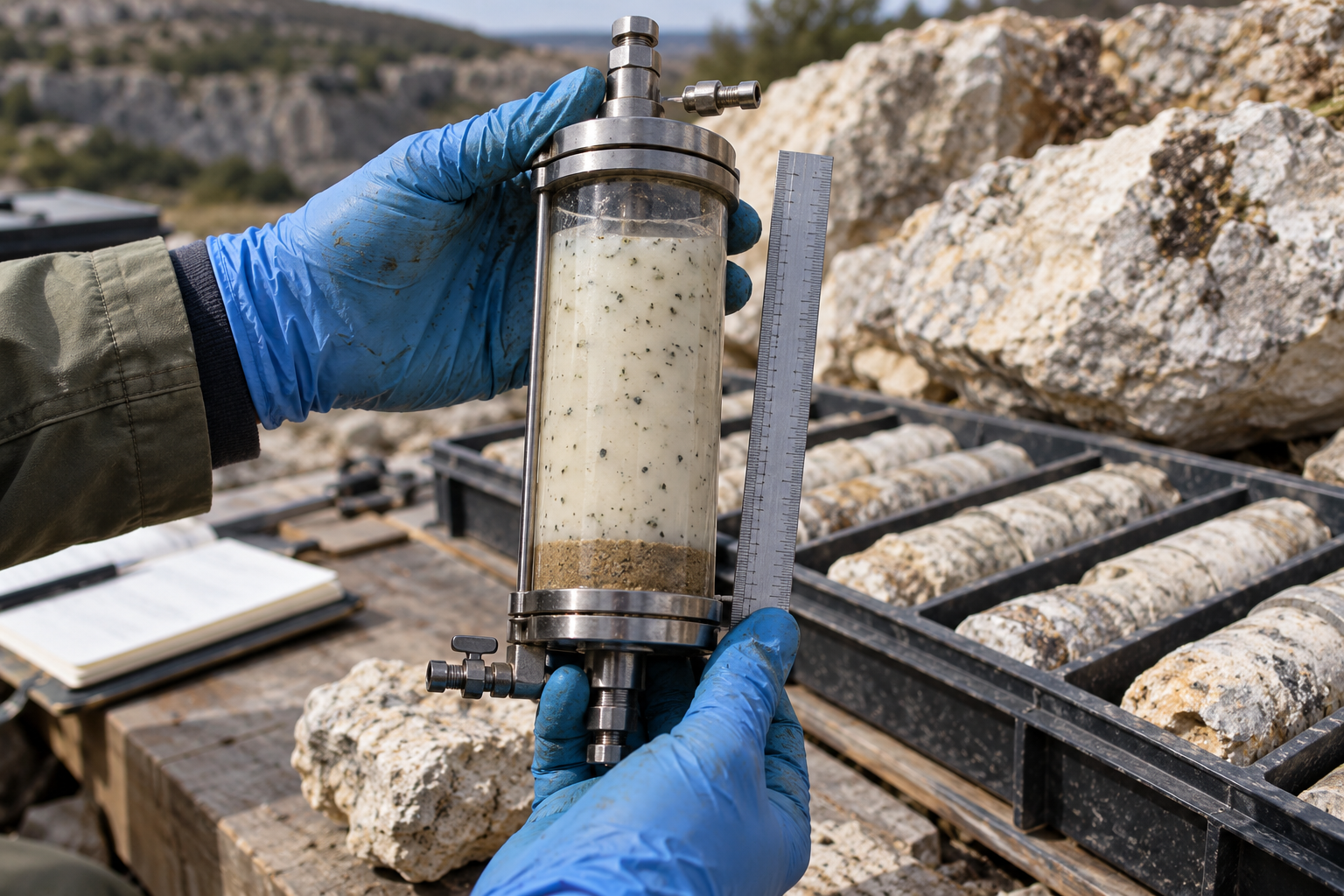
The sampler’s principal modifications are an anti-dill bypass screen, a garlic-gradient isolation valve, and a low-shear transfer sleeve. The bypass is intended to preserve representative herb distribution, not to remove every particle that looks interesting. Excessive shear can destabilize the emulsion and cause the apparatus to describe two products where the formation supplied one.
Technicians are prohibited from naming samples Country Homestyle, Grandma’s Original, or Extra Creamy. None is a location, pressure reading, or documented grandparent. Sample CH-R07 remains acceptable even when it reminds the analyst of a picnic.
Sampling utensils are catalogued separately from dining utensils. A ladle may move material effectively, but efficiency alone does not qualify it as a hydrogeological instrument. This ruling followed an incident in which the field lunch acquired an inventory number.
6. Ingredient names and mineral associations
Native ranch is an emulsion with associated constituents, not a chemically pure substance. Herbaceous inclusions settle along low-velocity interfaces; garlic-rich fractions follow deeper retention paths; pepper associates with confined fractures. Acidic recharge changes the local signature without consulting the product-development department.
Conventional labels describe these constituents using familiar culinary names. This is useful for discussing the recovered material and insufficient for establishing its complete subsurface history. Calling a pale dispersed phase “buttermilk” does not identify which formation supplied it, how long it remained confined, or why it was accompanied by dill.
The word ranch introduces another nomenclatural burden. It can describe a landholding, a dressing, or a claim that something has been seasoned in a reassuringly rural manner. No assay has established that cattle are a necessary constituent. A photograph of a fence supplies neither an emulsion analysis nor a well log.
Nobody explaining a household preparation thereby establishes the full composition and geological provenance of the native material. They know what they added. The Directorate would also like to know what was already there.
7. Regional water histories and the basin register
Regional differences reflect recharge, temperature, confinement, and the availability of mobile herb-bearing fractions. Cool Upper Midwest formations retain stable dispersed phases. Great Plains recharge distributes herbaceous material across broad connected intervals. Plateau basins preserve deeper garlic associations, which become more apparent as seasonal water availability declines.
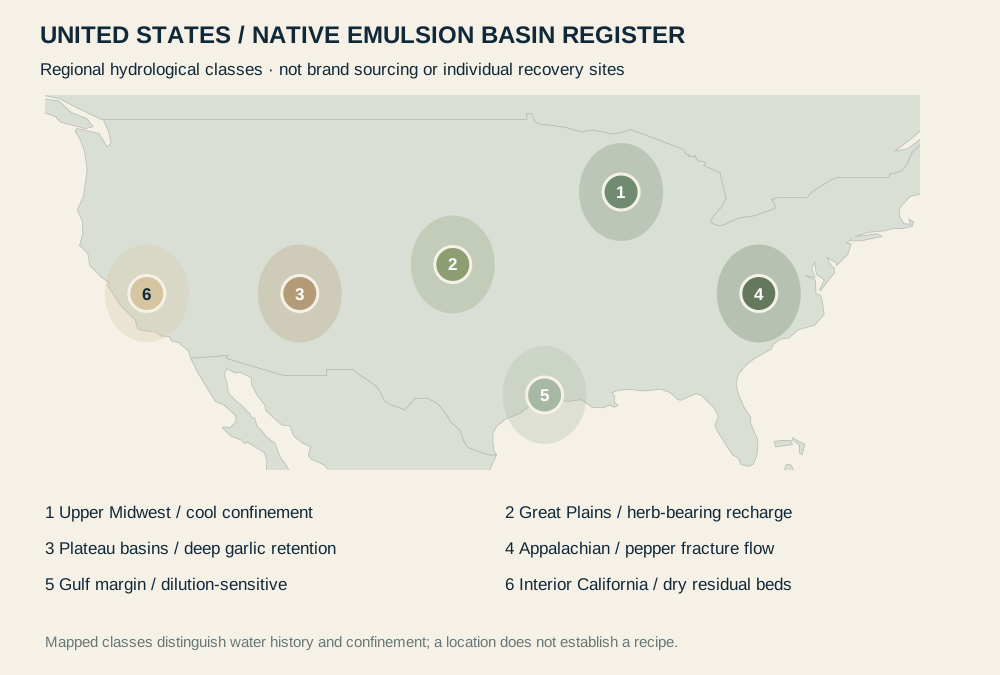
| Class | Hydrological history | Recovered signature |
|---|---|---|
| 1 / Upper Midwest | Cool recharge; persistent confinement | Stable pale emulsion; confident buttermilk character |
| 2 / Great Plains | Broad connected herb-bearing flow | Distributed dill; fewer local flavor ambushes |
| 3 / Plateau basins | Limited recharge; deep retention | Garlic-forward; conversation carries farther |
| 4 / Appalachian fractures | Confined fracture transport | Pepper-rich; dressing resists being called mild |
| 5 / Gulf margin | High mobile-water contribution | Dilution-sensitive; larger volumes, fewer convictions |
| 6 / Interior California | Water loss; residual-solid preservation | Dry recovery; packet-compatible deposits |
The Gulf class illustrates the danger of reporting volume alone. An operator can recover more litres while recovering less ranch per litre. The formation has not become more productive; the accounting has become more agreeable.
Dry-basin classifications concern retained solids, not instant culinary manufacture. The absence of visible liquid should not be confused with the absence of a resource. It should, however, discourage swimming.
8. The powder is the lake without the scenery
Powdered ranch is the dehydrated form of recovered native emulsion, or the processed output of a dry residual bed. Removal of water permits transport of the retained constituent fraction without shipping its entire liquid environment.
Adding water restores a preparation. It does not account for the existence of the substance being restored. The person stirring the bowl has performed a downstream operation and may still know nothing about the upstream deposit.
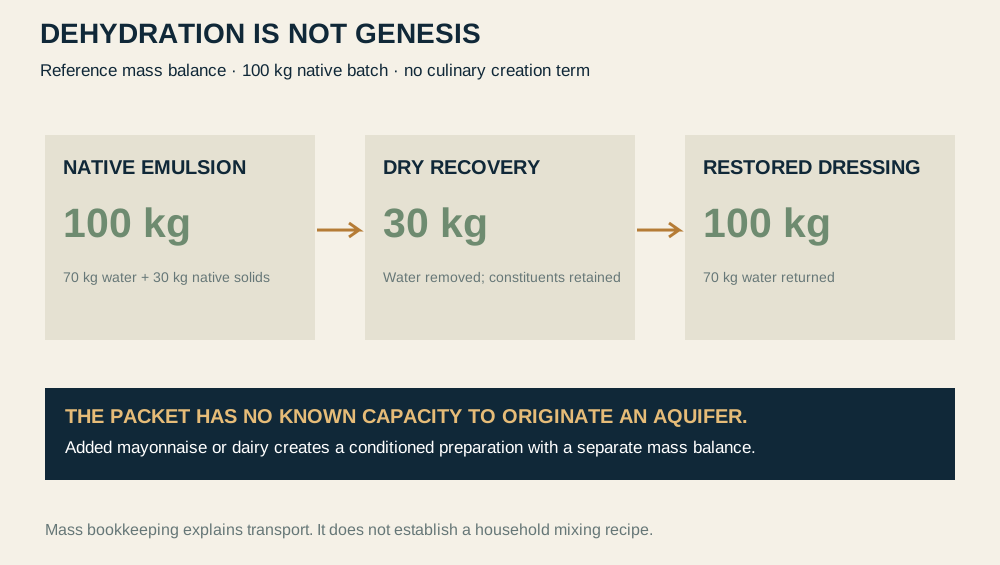
Mayonnaise, buttermilk, sour cream, and other carriers change the final mass balance and texture. These are conditioned preparations, not proof that the native resource was created in the bowl. The reference calculation tracks water removal and return; it does not prescribe a household recipe.
A packet is therefore a compact resource container. Its instructions can be excellent while remaining silent on geological origin. “Add liquid” is an operational instruction of remarkable efficiency and very limited explanatory ambition.
The powder has had its water removed. The consumer has had the difficult questions removed. These are separate processing steps.
9. Well recovery, drawdown, and unnecessary enthusiasm
Confined emulsion is recovered through controlled pumping. Low-shear transfer preserves dispersed phases; inline inspection tracks suspended herbs; separate settling removes host sediment before conditioning. Excessive withdrawal reduces pressure and can draw adjacent groundwater into the producing interval.

Pressure is not interchangeable with eagerness. Increasing the pump setting because “people really like ranch” does not improve permeability, restore the confined volume, or persuade dill to distribute evenly. The aquifer has no mechanism for responding to a promotional campaign.
Dehydrated beds require selective dry recovery and subsequent milling. Open lakes permit surface withdrawal but introduce shoreline-management problems. Room-and-pillar methods may support access galleries where competent host rock surrounds a dry deposit; they are poorly suited to a room whose contents are still dressing.
Bulk excavation was considered for exposed formations. The review ended when the earth-moving contractor described the proposed basin as “a large dip.” The geological committee accepted the noun and disputed the implication that chips constituted a recovery plan.
10. The extraction–recharge balance
The reference reservoir begins with 12.0 million litres of recoverable native ranch. Annual recharge remains 0.30 million litres while extraction rises from 0.90 to 1.50 million litres. Inventory follows the conservation relation below; quantities are in millions of litres.
V is recoverable inventory, R is recharge, and Q is extraction. Enthusiasm does not appear in the equation because it has not been demonstrated to replenish a formation.
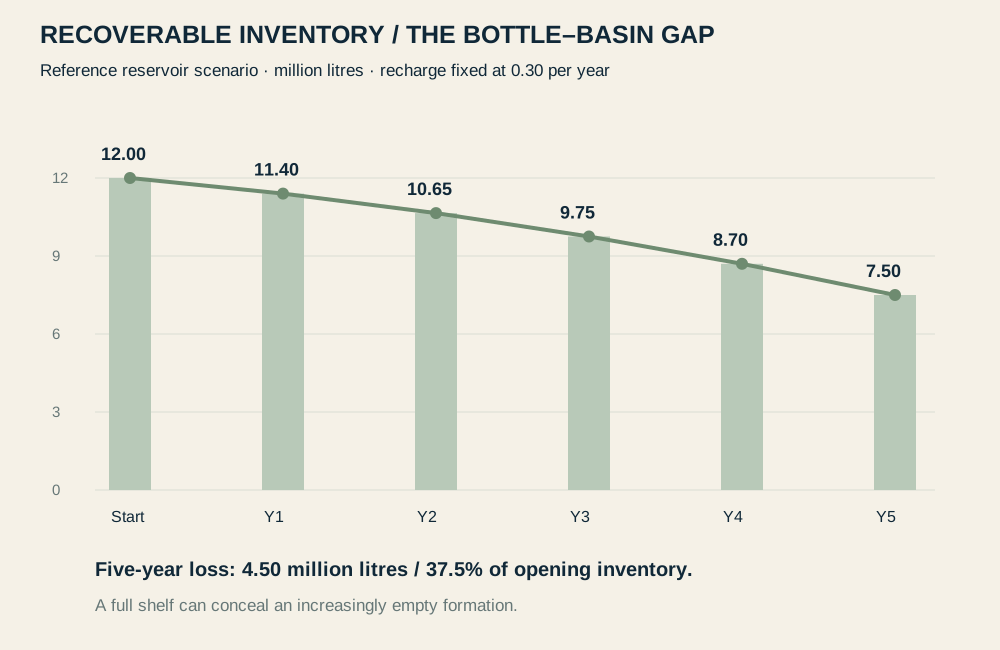
| Model year | Opening inventory | Recharge | Extraction | Closing inventory |
|---|---|---|---|---|
| 1 | 12.00 | 0.30 | 0.90 | 11.40 |
| 2 | 11.40 | 0.30 | 1.05 | 10.65 |
| 3 | 10.65 | 0.30 | 1.20 | 9.75 |
| 4 | 9.75 | 0.30 | 1.35 | 8.70 |
| 5 | 8.70 | 0.30 | 1.50 | 7.50 |
The modeled system loses 4.50 million litres in five years, or 37.5% of opening inventory. Continuing fifth-year extraction produces a further net loss of 1.20 million litres annually. Simple volume arithmetic suggests another 6.25 years; pressure loss, inaccessible residual material, and water ingress can end useful recovery sooner.
Counting bottles on a supermarket shelf misses this depletion. Conditioning and distribution can maintain the appearance of abundance while the source formation declines. The shelf is full because the basin is becoming empty.
11. Quality reporting and strategic condiment reserves
Useful output requires composition-adjusted reporting. Native-emulsion fraction, suspended-herb distribution, pressure history, and water ingress must accompany recovered volume. A container labeled “creamy” supplies no substitute for those measurements, however large the font.
The Directorate uses a Dip Retention Factor to compare standardized coating behavior. The zero control is a polished spoon over which nothing adheres; the reference control is a neutral celery baton. Neither is permitted to express a preference. Exceptional retention is reported separately because a dressing that refuses to leave the vegetable may be plentiful in the basin and unavailable at the table.
Strategic reserves must distinguish bottled stock, dry recoverable solids, and formation inventory. A warehouse can postpone a distribution shortage; it cannot recharge the aquifer. Rehydrating powder restores transported material and does not refill the lake from which the material was originally recovered.
Emergency planning should also account for barbecue demand, institutional wing consumption, and the sudden appearance of a person who puts ranch on everything. The last category is a small demographic and a substantial withdrawal event.
12. Conclusions and condiment stewardship
The central provenance problem remains unresolved by recipe confidence. Preparation accounts describe downstream activities; native-emulsion hydrology describes the resource supplying the recoverable material. Surface lakes, confined aquifers, and dry residual beds belong to the same depositional system and require different recovery methods.
The reference reservoir cannot sustain rising withdrawals under fixed recharge. Resource stewardship requires extraction limits, pressure protection, composition-adjusted inventories, and an accounting system that recognizes ranch before it reaches a bottle.
Future work will compare condiment basins with autumnal aromatic formations. Shared proximity does not establish shared origin. Serving pumpkin-spiced wings with ranch nevertheless represents a concentrated use of underground resources and should be recorded accordingly.
Until the recharge problem is resolved, the Directorate recommends greater restraint in calling anything “bottomless.”
Research records and provenance
- CH Reservoir Standard R-4: Confined herb-bearing emulsions and exposed lacustrine resources.
- CH Provenance Memorandum 9: Recipe divergence and dehydrated native ranch.
- CH Sampling Order 11: Pressure retention, low-shear transfer, and the classification of field lunch.
- CH Reporting Circular 6: Composition-adjusted reserves and volume–condiment discrepancies.
- CH Reconstruction Register L-2: Great Native Ranch Lakes and megafaunal shoreline access.
- Map geometry: Natural Earth, public-domain 1:110m country outlines. Directorate basin overlays and plate artwork are original.